
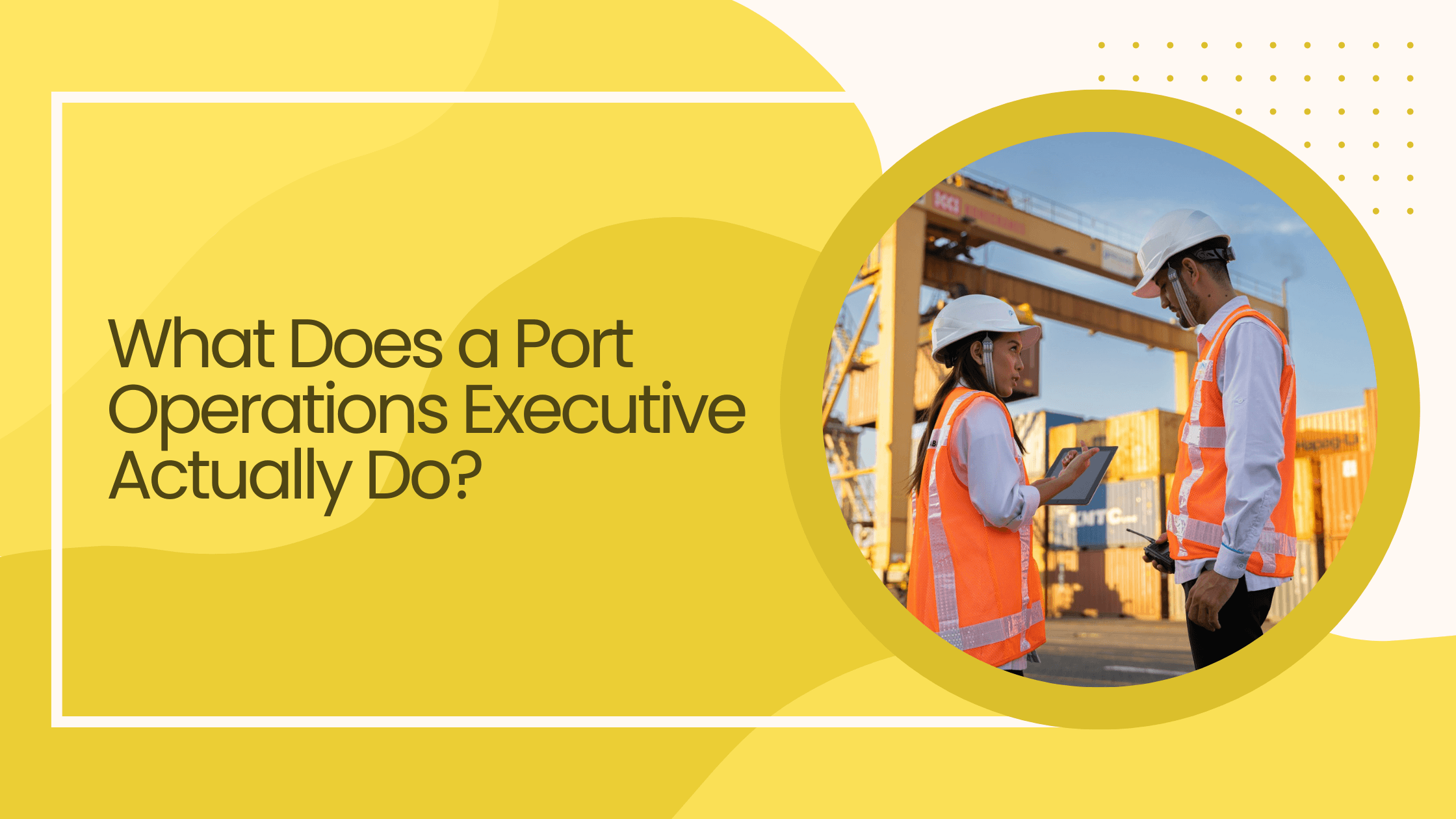
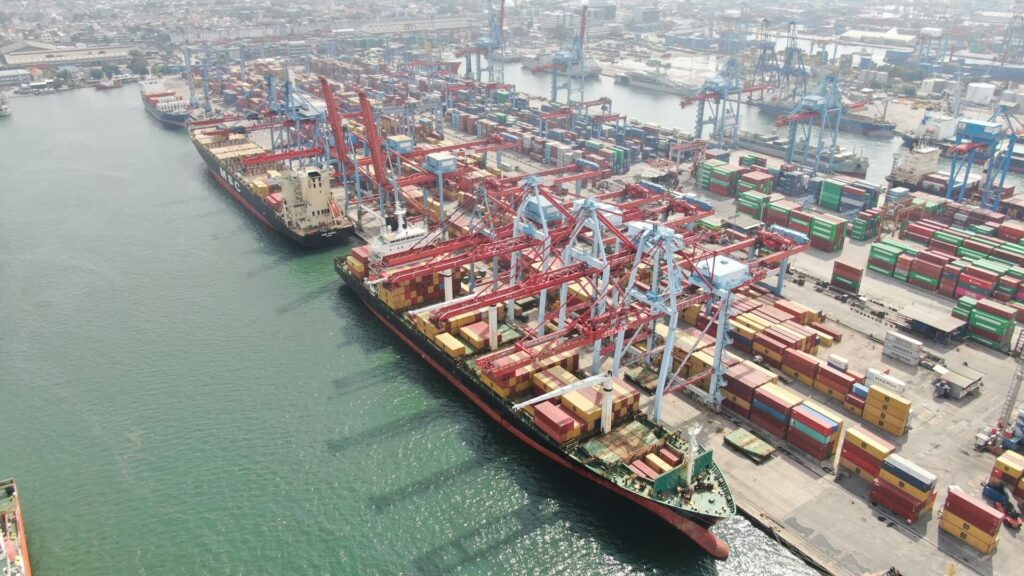
A modern container vessel can carry over 10,000 containers. Yet a delay of just a few hours at port can disrupt hundreds of supply chains at once. At Chittagong Port, vessels often arrive on schedule — then wait at anchorage before operations even begin.
So what actually determines whether your cargo moves on time? Behind every vessel call is a Port Operations Executive making real-time decisions. Those decisions directly affect cost, speed, and reliability. By the end of this post, you will know exactly how.
- A port operations executive plans berths, coordinates vessel calls, and tracks terminal KPIs from arrival to gate-out
- This role sits on the carrier side (e.g. Maersk, MSC, Evergreen) — not the port authority
- Key metrics: CMPH (30+ at minimum), berth occupancy (70–85%), and vessel turnaround time
- Delays happen even with on-time arrival — berth, yard, and customs all play a role
- In Bangladesh, this role covers Chittagong Port, Patenga, and Mongla calls
Who Is a Port Operations Executive?
A port operations executive is a shore-based professional. They work for a shipping line — such as Maersk, MSC, or Evergreen — not the port authority or stevedores. Their job is to ensure vessels are handled efficiently from arrival to departure.
Think of this role as the bridge between the vessel, the terminal, customs, and inland logistics. It covers vessel scheduling, berth coordination, cargo operations, and stakeholder management. Whether the title says vessel operations executive or terminal operations executive, the goal is the same: fewer delays, lower costs, smoother cargo flow.
Why This Role Matters to You
If you import, export, or plan to work in logistics, this role directly affects your cost, time, and risk.
For importers and e-commerce sellers: demurrage starts the moment free time expires. The port operations executive manages that window.
For freight forwarders: rollover risk, load-list cutoffs, and gate-in timing all depend on decisions this role makes.
For students: this is one of the most demanding shore-based roles in maritime. The work goes far beyond what a standard vessel operation job description suggests — and the salary reflects that.
What a Port Operations Executive Actually Does — Step by Step
Step 1. Vessel Schedule and Berth Planning
It starts with ETA monitoring. Vessel arrival times shift constantly, so berth windows must change with them. The ops executive coordinates pilots and tugs for safe berthing. They also factor in draft restrictions — this is especially important at Mongla Port. A healthy berth occupancy rate (BOR) sits between 70% and 85%.
Step 2. Coordinating with the Terminal and Stevedores
This is where plans meet execution. The ops executive works with the terminal on crane gang allocation. The target is 30 or more crane moves per hour (CMPH). They review STS crane sequencing to decide which bays get worked first. They check yard plans to make sure containers are reachable. One key point: they do not operate cranes. They hold the terminal accountable to agreed productivity levels.
Step 3. Cargo Documentation and Customs Coordination
Accurate documents are non-negotiable. The ops executive checks bay plans, stowage plans, and cargo manifests before the vessel arrives. Pre-arrival customs clearance is critical. A single mismatch can trigger manual corrections — and that delays discharge. That delay eats directly into the importer’s free time.
Step 4. KPI Monitoring and Performance Reporting
Once operations start, tracking takes over. The ops executive monitors turnaround time, berth occupancy, CMPH, dwell time, and yard utilization. A large share of this work still involves manual data entry and validation. That is changing — but for now, real-time KPI tracking is what keeps operations honest and accountable.
Maersk Moment #1 — When the Berth Is Not Ready
Working in Maersk Bangladesh’s terminal operations team, I have seen vessel bunching cause serious delays at Chittagong. One case stood out.
A vessel arrived at outer anchorage on schedule. But the berth was still occupied. The previous vessel had a crane breakdown and ran over her ETD. We had to find a solution fast.
Our berth planning team contacted the chief of the harbor department. We managed to secure a revised berth — one that freed up earlier than declared. But the two hours before that decision were intense.
The vessel master was at the pilot station, calling port control and our local agent for updates. We had to alert HQ, coordinate with the terminal, and manage communication across every stakeholder at once.
If we had not secured that berth, the vessel would have faced cargo renomination costs. A critical cargo connection would have been missed. That moment showed me what this role is really about — fast decisions under pressure, with real financial consequences.
Port Operations in South Asia — The Bangladesh Reality
In South Asia, the job looks very different from the textbook version.
Chittagong Port handles over 90% of Bangladesh’s containerized trade. Congestion is common. Infrastructure is aging. Execution here is far more complex than at automated global hubs. Foreign operator involvement in key terminals is now reshaping the landscape.
Patenga handles heavy feeder traffic. Mongla faces draft limitations that add another layer of planning. At these ports, the real port operations executive job description is not about following a plan. It is about adapting when the plan breaks down.
FAQ Section
Q1: What is the role of an operations executive in shipping? A port operations executive manages vessel schedules, coordinates with terminals and agents, and tracks KPIs. It is a practical, hands-on role focused on keeping cargo moving.
Q2: What skills do you need to be a terminal operator? You need strong coordination skills, the ability to read data fast, and knowledge of terminal operating systems (TOS) and bay planning. Working under pressure is part of the job. Basic SOLAS awareness is essential.
Q3: What is the difference between a vessel and terminal operations executive? A vessel operations executive handles the carrier side — schedules, ETAs, and agent communication. A terminal operations executive focuses on crane performance, yard planning, and gate flow.
Q4: What is a port operations executive salary in South Asia? It varies by employer. Check LinkedIn or local job boards for current figures. Multinational carriers typically pay more than local operators.
Key Takeaways
- A port operations executive manages vessel schedules, berth planning, and terminal coordination
- The role sits on the carrier side — between the vessel and the terminal
- KPIs like CMPH, turnaround time, and yard flow directly affect your cost and timeline
- The real job is far more dynamic than any standard job description suggests
Understanding this role helps you plan smarter and avoid costly surprises.
Conclusion
A port operations executive is invisible when everything runs well. They become critical the moment something does not. This role sits between the vessel, the terminal, and the inland chain. It quietly prevents delays, controls costs, and keeps cargo moving. Whether you look at it through a vessel operations or terminal operations lens, the work goes far beyond a job description. It is constant coordination, fast trade-offs, and execution under pressure — every single vessel call.